Blog

Creating More Ease

Blog

Can a business owner take a holiday?

I have noticed that, for accommodation providers, summer often means anything but a holiday.

While guests arrive to relax, the busiest season of the year begins for the accommodation business. The phone rings, bookings change, special requests come in, payments need to be checked, and last-minute questions must be answered. One guest would like to arrive earlier, another wants to leave later, and a third asks in the evening whether they could check in within the next hour.

Very often, the owner of the accommodation business handles all of this personally.

They answer the phone, check the calendar, send door codes or open doors, organise cleaning, and keep their laptop nearby just in case. Even when the calendar says “holiday”.

Could running an accommodation business work differently? Can we design our processes so that summer does not mean being permanently on call? Could technology, well-considered sales terms, and the courage to make conscious choices give business owners the opportunity to truly rest?

I believe they could.


————————————————————————————-
Helina Viik
Marketing / Partner

Could work feel effortless?

The word “ease” may initially sound strange in a business context, as though it meant less ambition, less effort, or too much comfort.

For me, ease does not mean that no work gets done. It means not spending our time and energy on tasks that a well-designed system could handle for us.

Ease can mean that:

  • a booking is automatically added to the correct calendar;
  • the guest can choose the right room or service themselves;
  • payment is made during the booking process;
  • availability remains up to date across all sales channels;
  • the guest receives the necessary information automatically;
  • the door code is sent at the right time;
  • the business owner does not need to check everything again in the evening in case something has been missed.

An accommodation property—whether a hotel room, holiday home, or apartment—can feel warm and welcoming without someone being constantly present. That feeling is created through thoughtful details and a pleasant atmosphere waiting for the guest upon arrival: complimentary coffee, tea and sugar, a bottle of water, soft textiles, warm lighting, fresh flowers, or a small welcome note.

A pleasant fragrance, local treats, a few good books, and other carefully chosen details can add to the sense of comfort. These small touches show guests that someone has thought about them.

Administrative noise, however, can be reduced.

Technology does not have to take away from the human guest experience. Quite the opposite: it should free up the owner’s and employees’ time so that they can focus on the activities where a person’s presence truly adds value.

Can an accommodation provider take time off during peak season?

Taking a holiday does not necessarily mean closing the business for a week or shutting down all sales channels. Sometimes it is enough to review your booking conditions and daily processes.

One option is to introduce a minimum-stay requirement during peak season or only on weekends.

For example, you might decide that stays beginning on Friday or Saturday must be booked for at least two nights.

At first, such a condition may seem to restrict sales. In reality, it can help the business use its time and resources much more consciously.

Choosing to accept guests who stay for two nights instead of one can mean:

  • fewer check-ins and check-outs;
  • less daily cleaning;
  • lower laundry costs;
  • more opportunities to take time off.

For a small accommodation business in particular, managing one-night stays can take a disproportionate amount of time. The room must be prepared, information sent to the guest, arrival monitored, the room cleaned after departure, and everything made ready again for the next person.

When a guest stays for two or three nights, the workload and costs between arrivals are lower.

Naturally, a minimum-stay rule does not suit every period. It can be used only on the most in-demand dates, during summer weekends, around major events, or whenever you consciously want to reduce the number of very short stays.

It is important to understand that a business owner does not have to accept every possible booking. Booking conditions should support both the profitability of the business and the owner’s quality of life.


A last-minute guest does not have to mean a late-night phone call

Another common concern is the last-minute booking. Imagine that it is ten o’clock in the evening. A guest is travelling around Estonia and decides they do not want to drive any farther. They search on their phone and find your accommodation.

With a traditional way of working, this may lead to a late-night phone call:

  • Do you have a room available?
  • How can I pay?
  • Where do I get the key?
  • What time may I arrive?

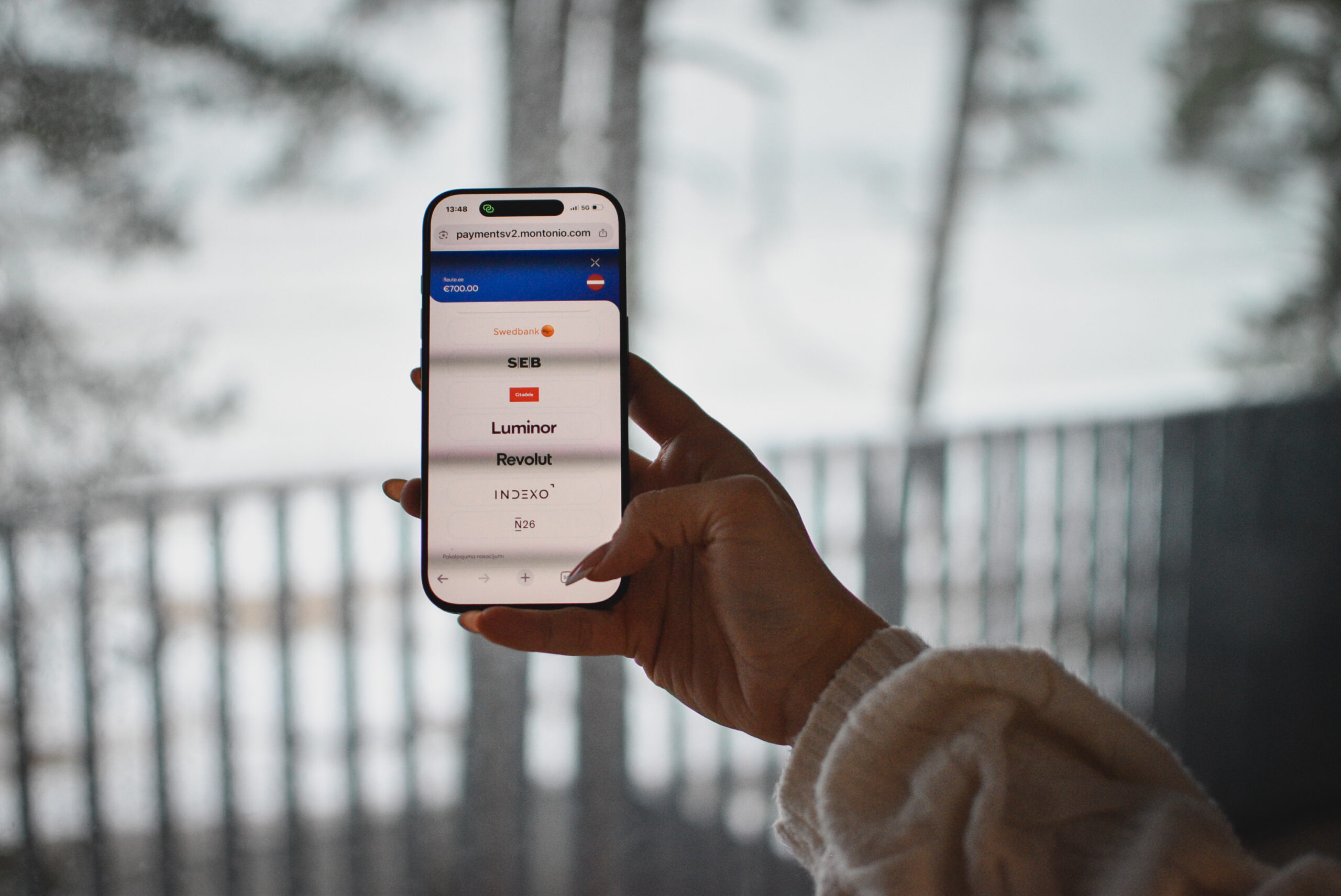
When a business has online booking, an automated payment solution, and smart locks, the entire process can take place without the owner’s direct involvement.

The guest:

  • finds the accommodation online;
  • checks availability;
  • makes a booking;
  • pays for the stay;
  • automatically receives confirmation and a door code;
  • arrives at a suitable time;
  • leaves the following day or the day after.

Meanwhile, the business owner can rest, spend time with family, or simply sleep. In the morning, the booking, payment, and all the necessary information are already in the system.

This does not mean leaving the guest without help. Naturally, they should still be able to contact someone when necessary. But the business’s normal booking process should not depend on whether the owner notices a call that comes in at 10:07 p.m.

This is where the real value of well-organised automation becomes clear. It is not only about processing bookings faster. It is about enabling the business to earn revenue even when the owner is not actively working.

Why ask for prepayment?

Asking for prepayment can feel uncomfortable for an accommodation provider.

  • Will a potential guest choose another property, causing us to lose revenue?
  • Will it feel too strict?
  • Should we be more flexible?

But let us also look at the situation from the business owner’s perspective.

When a guest books a room, sauna, package, or treatment, that time is taken off the market. Meanwhile, the business may make preparations, schedule employees, order necessary products, or turn down other bookings.

A booking is not simply a name in a calendar. It is the business’s promise to reserve a particular resource for a particular customer. Prepayment makes that promise mutual.

The customer confirms their intention to come, and the business confirms that the requested room or service will be held for them. It is a clear agreement between both parties.

In my view, accommodation providers should not be afraid of prepayment, because there are several possible solutions for genuinely unexpected situations. If a guest has an accident, becomes ill, or cannot travel for another valid reason, travel insurance may cover the resulting costs, depending on the policy and level of cover selected.

The accommodation provider can also remain human and flexible. When a customer gets in touch, explains the situation, and looks for a solution, the case can always be considered individually. You may decide to issue a refund, offer a gift voucher, or move the booking to a suitable date in the future.

Clear conditions do not mean that exceptions can never be made. They give the business owner a starting point from which to decide when to follow the original terms and when it makes sense to accommodate the customer.

Flexibility should be a conscious choice, not an obligation that arises every time a guest changes their plans.

Prepayment is also important for automated last-minute bookings. When a guest makes a booking late at night and immediately receives a door code, the business must know that the stay has been paid for.

When payment can be made quickly and securely during the booking process, everything becomes clearer for both the customer and the business.

What happens when a guest cancels at the last minute?

Cancellations are a natural part of the accommodation business. Flights are delayed. Children become ill. Plans change.

The question is not whether cancellations will happen. The question is whether the business has well-considered rules for handling them.

When a guest cancels at the last minute, the business may no longer be able to resell the same room or service. The revenue is lost, even though several costs may already have been incurred.

Without clear conditions, the business owner must resolve each situation individually. This leads to more emails, phone calls, negotiations, and sometimes uncomfortable disputes.

A clear cancellation policy is not a punishment. It is a way of managing expectations.

Before confirming a booking, the customer should know:

  • until what time they may cancel free of charge;
  • when the booking becomes non-refundable;
  • under what conditions the dates may be changed;
  • what happens in the event of a late cancellation or no-show.

When these conditions are visible during the booking process, there are fewer misunderstandings and greater certainty for both parties.

Do we have the courage to choose our customers?

In the accommodation industry, we talk a lot how customers choose us.

  • What is our price?
  • What do the reviews say?
  • Does our website inspire trust?
  • How easy is it to book?

We ask less often whether the business also has the right to decide under what conditions it wants to provide its service. Not all bookings are equally valuable to the business.

Highly flexible conditions may generate more bookings, but they can also lead to more cancellations. A price that is too low may fill the calendar without covering the actual costs. One-night stays may increase occupancy but create so much additional work that the owner and employees are exhausted by the end of the season. Accepting every special request may feel like good service—until daily operations become chaotic.

Choosing your customer does not mean being arrogant. It means making a conscious decision:

What kind of experience do we want to offer, and under what conditions can we deliver it well?

  • Sometimes that means asking for prepayment.
  • Sometimes it means requiring a stay of at least two nights.
  • Sometimes it means setting clear arrival and departure times.
  • Sometimes it means deciding not to refund a last-minute cancellation.
  • And sometimes it means not saying “yes” to every request.

Boundaries do not make service worse. Well-considered boundaries help business owners maintain the motivation to continue offering accommodation.

Ease comes from clear decisions

We often look for simplicity in a new feature, programme, or automation. But ease does not come from technology alone. It also comes from clear decisions.

  • Will we require prepayment?
  • How long may a guest cancel free of charge?
  • Will a minimum-stay rule apply during peak season?
  • Will we allow automated late-night bookings?
  • What exceptions will we make?
  • Which tasks must be handled by a person, and which could be handled by the system?

Once those decisions have been made, technology can support them.

At ED Hotels, we believe that a website and management software are not goals in themselves. They are tools that should help increase sales and make daily work easier.

Our background in the hotel industry has taught us that what matters is not simply how many features a piece of software has. What matters is whether those features genuinely support the business on a busy summer morning, during a peak weekend, or at ten o’clock in the evening when the next guest is still looking for somewhere to stay.


A holiday for the accommodation provider should not be an exception

Taking time off is not a luxury for a business owner. It is necessary for maintaining motivation, creativity, and enjoyment in one’s work.

When a business only functions while the owner remains constantly close to their phone, the problem is not the owner’s desire to take a holiday. The processes, booking conditions, or systems probably need to be reviewed.

  • Perhaps prepayment could reduce uncertainty.
  • Perhaps a two-night minimum stay could create a cleaning-free day during the weekend.
  • Perhaps online booking, automated payment, and a door code could welcome a late-night guest without forcing the owner to switch from holiday mode back into work mode.

Not everything can or should be automated. But the business owner should not have to act as the only link connecting every booking, payment, and date change.

A well-run accommodation business should not require constant readiness to react.

It could also mean creating with ease.